

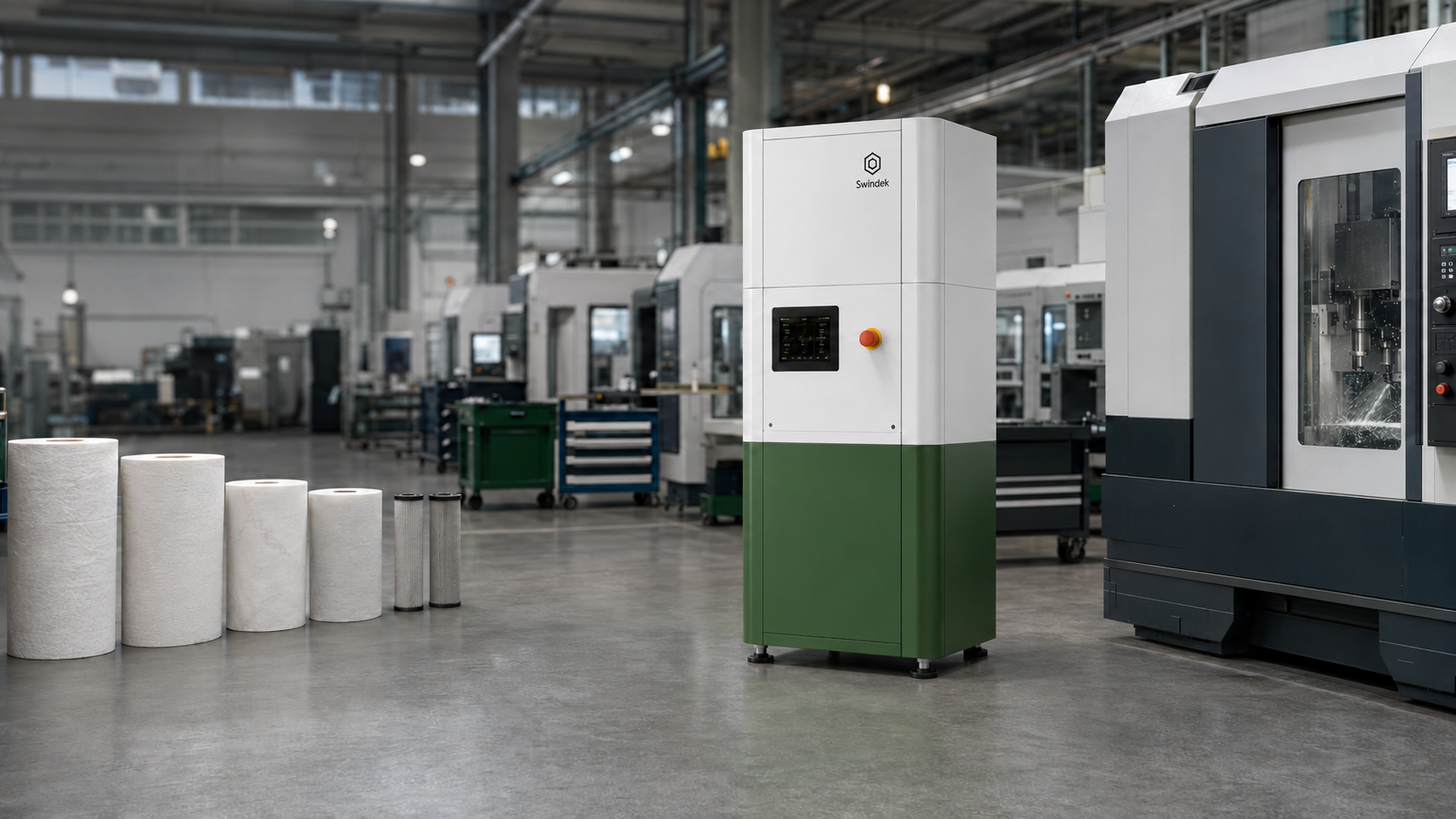
Beyond Filter Purchase Price: The Economics of Regenerative Coolant Management
Filtration is often judged by equipment price, but manufacturers continue paying through consumables, intervention, fluid replacement, waste, cleaning and lost machine availability. Swindek by GreenHexagon reframes coolant management as regenerative process infrastructure evaluated through recurring operating burden.
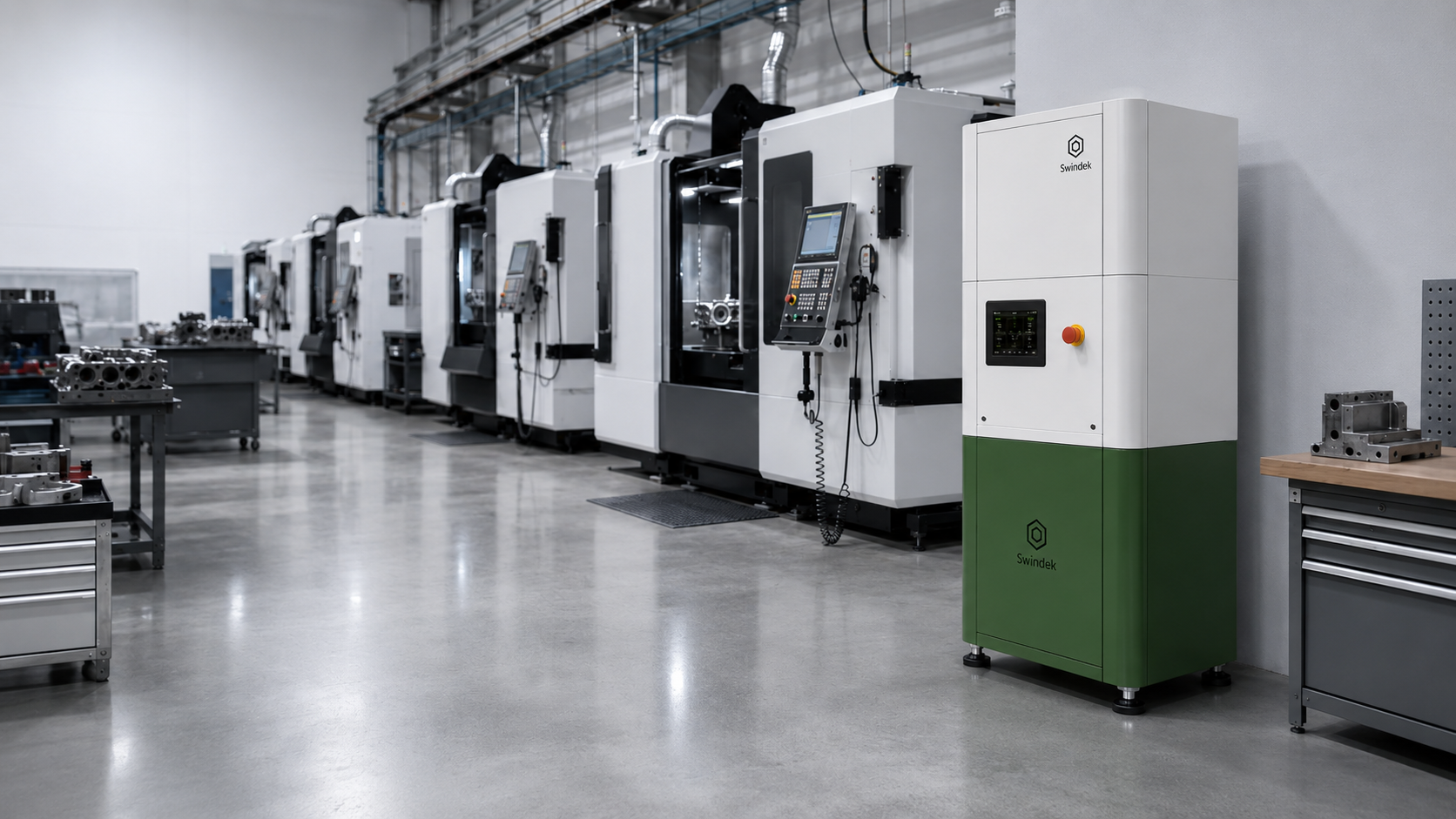
Why Compact Coolant Management Matters for Machine-Tool Builders
Machine-tool builders compete on precision, automation and lifecycle value. Yet coolant management often remains external, bulky or difficult to integrate. This article explains why compact regenerative coolant-management architecture matters for OEMs: machine layout, serviceability, factory floor space, waste handling and future monitoring.
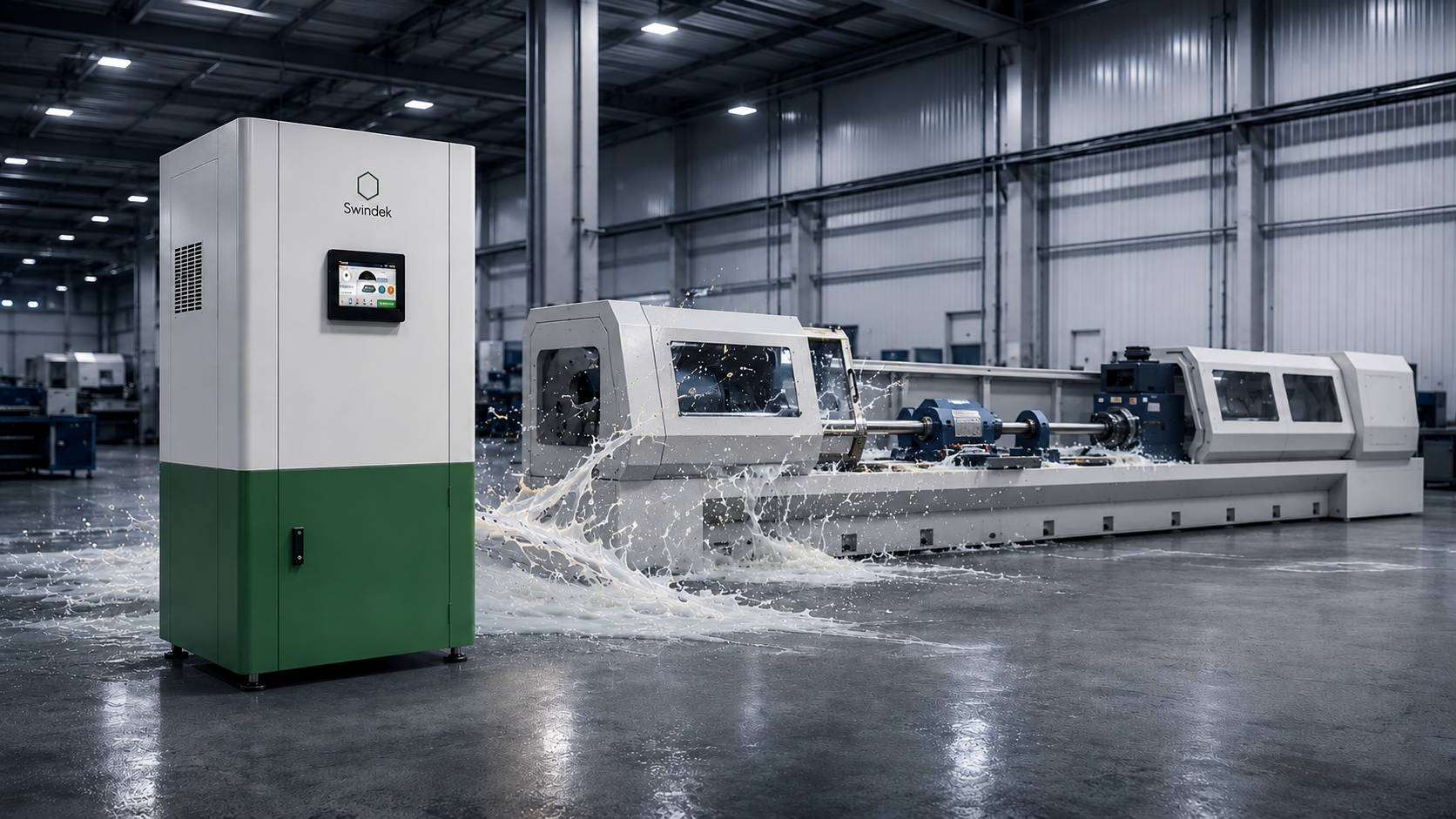
Coolant Stability: The Hidden Driver of Scrap, Downtime and Operator Workload
High-material-removal CNC, deep-hole drilling and aerospace machining place heavy demands on coolant stability. Foam, dirty sumps, sludge, filter changes and inconsistent finish are not isolated maintenance issues. They are signs of a wider process burden. This article explains why coolant stability matters, what workshops should measure, and how filtration supports more reliable machining.

Regenerative Fluid Management vs Traditional Filtration: Why a Filter Is No Longer Enough
Traditional filtration often treats contamination as something to trap, replace and dispose of. In precision machining, the real challenge is wider: coolant stability, operator workload, waste handling, downtime and lack of visibility. This article explains why modern workshops need regenerative fluid-management infrastructure — not just another filter.